

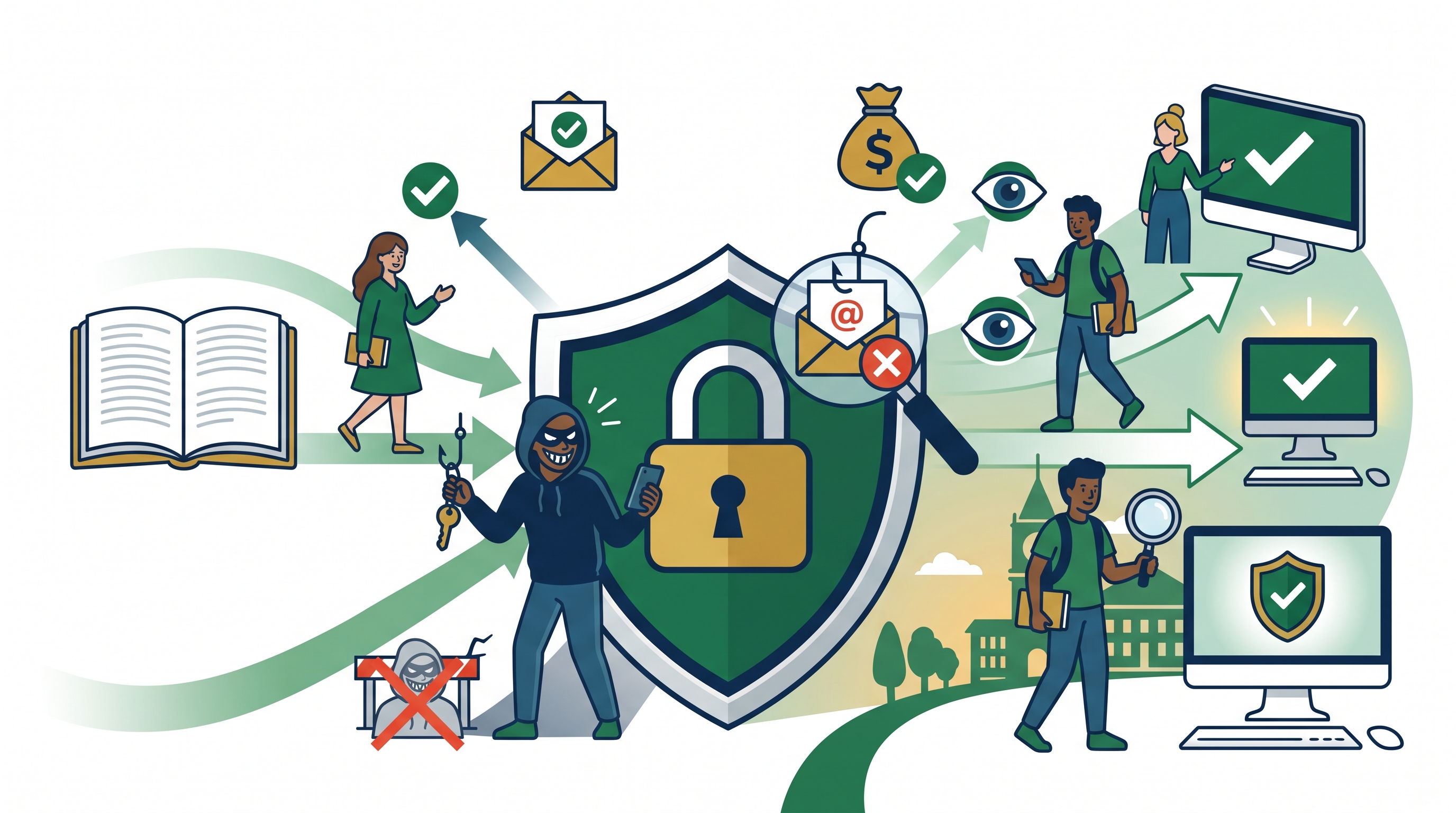
Stay Alert Against Scams
In recent years, telephone and online scams have become increasingly common in Hong Kong, and university students are often targeted. Common scams include impersonation scams, telephone deception, online job scams, online shopping scams, rental scams, and investment fraud.
Scammers may impersonate government officials, courier company staff, university personnel, or potential employers in an attempt to obtain personal information or money. They often create a sense of urgency to pressure victims into acting without verification.
To protect yourself, never disclose personal information, banking details, passwords, or verification codes to unknown individuals. If you receive a suspicious call, message, or email, stay calm and verify the information through official channels before taking any action.
If you are in doubt, contact the Hong Kong Police Force Anti-Deception Coordination Centre (ADCC) Anti-Scam Helpline at 18222. Remember: Pause, Check, and Verify before responding to any request involving personal information or financial transactions.
Anti-Scam Awareness Quiz
To enhance awareness of scam prevention and common deception tactics, newly admitted students are required to complete the mandatory Anti-Scam Awareness Quiz. The quiz introduces common scam scenarios, preventive measures, and available support resources.
Latest Scam Alerts
Anti-Scam Posters


Anti-Scam Videos
Need Help?
If you suspect that you have encountered a scam or become a victim of fraud, seek assistance immediately. You may contact the Hong Kong Police Force Anti-Deception Coordination Centre (ADCC) Anti-Scam Helpline at 18222 for advice and support. In case of emergency, please call 999 immediately.
Students may also seek assistance from the University Security Office, Colleges, the Office of Student Affairs, and other relevant University administrative and support units.
Other Useful Links
What Should I Do If I Am Being Scammed?
- Stay calm and stop communicating with the suspected scammer.
- Do not transfer money or provide additional personal information.
- Keep screenshots, messages, emails, receipts, and call records as evidence.
- Contact your bank immediately if financial information has been disclosed.
- Call the ADCC Anti-Scam Helpline at 18222 for advice.
- Report the incident to the Police.
- Inform the University if you require support or assistance.
